January 23, 2026
The way websites receive and manage traffic has fundamentally changed. According to WP Engine’s 2026 Website Traffic Trends Report, automated and AI-driven bots are no longer a minor concern—they now account for a massive share of global web traffic and directly impact website performance, security, and operating costs.
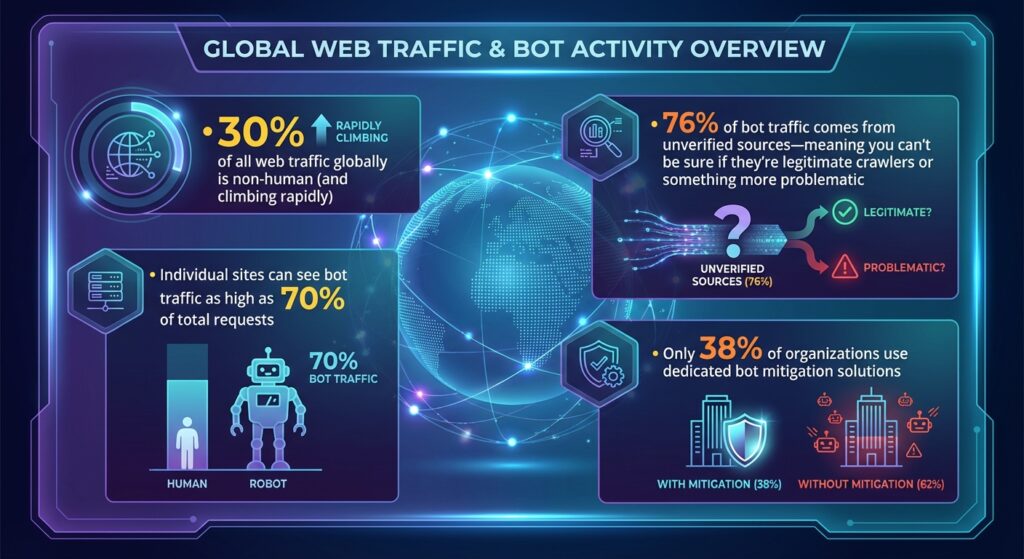
In some cases, AI bots generate up to 70% of total traffic requests, putting pressure on hosting resources and slowing down real user experiences. For businesses, agencies, and marketers, this shift makes intelligent traffic and bot management a strategic necessity rather than a nice-to-have.
The Rise of AI Website Traffic
Historically, web teams could safely assume that most traffic came from real users. That assumption no longer holds.
Global data shows that non-human traffic now averages roughly 30% worldwide, with significantly higher concentrations in North America. Much of this growth is driven by AI crawlers, large language models, and unverified bots scraping content or consuming server resources.
The challenge isn’t just volume—it’s quality:
- Verified bots (like Googlebot or GPTBot) identify themselves and generally behave predictably
- Unverified bots make up the majority of automated traffic and pose higher risks to performance and security
Without proper bot traffic management, websites pay the price through slower load times, inflated bandwidth costs, and increased exposure to security threats.
Why Intelligent Bot Traffic Management Matters
WP Engine’s research makes one thing clear: modern website performance depends on proactively controlling traffic at the edge.
1. Performance and Cost Control
AI bots frequently hit dynamic resources, which are the most expensive to serve. Filtering and managing bot traffic before it reaches your origin server reduces:
- Hosting and bandwidth costs
- Server strain during traffic spikes
- Slowdowns for real users
2. Security Maturity
The report highlights a clear divide between organizations that invest in bot mitigation and those that don’t. Sites using advanced edge security tools consistently show:
- Stronger security posture
- Faster load times
- Fewer disruptions from malicious or unverified bots
Security is no longer separate from performance—it’s part of the speed stack.
3. Global Speed and User Experience
Websites serving global audiences often suffer from performance gaps due to geography. AI-driven bot traffic further exaggerates these issues.
Solutions like CDNs and edge caching dramatically reduce latency by serving content closer to users, while also absorbing bot traffic before it impacts site performance.
Key Findings from the 2026 Traffic Trends Report
Here are some of the most important insights web teams should pay attention to:
- AI and automated bots are responsible for a growing share of total traffic
- Unverified bots significantly outnumber verified bots
- Sites using CDNs see ~20% better performance in key metrics like Largest Contentful Paint (LCP)
- HTTPS-only websites load 1–5 seconds faster than sites still serving mixed or unsecured traffic
- Nearly half of high-traffic websites still aren’t using foundational performance tools like CDNs
These gaps create a widening divide between fast, secure websites and those falling behind.
What Web Teams Should Do Next
Based on WP Engine’s recommendations, high-performing websites in 2025 and beyond should focus on these actions:
Proactively Manage AI and Bot Traffic
- Monitor bot-to-human traffic ratios
- Implement bot management tools at the edge
- Publish crawler policies such as LLMs.txt to control AI access
Make Security a Performance Strategy
- Enforce HTTPS everywhere
- Adopt modern encryption standards like TLS 1.3
- Integrate security tools directly into hosting and deployment workflows
Optimize for Global and Mobile Audiences
- Use CDNs and edge caching
- Optimize mobile performance separately from desktop
- Reduce page weight, scripts, and plugin bloat
What This Means for Your Website
The rise of AI website traffic has changed the rules. Traffic volume alone is no longer a meaningful success metric—what matters is who (or what) is accessing your site and how efficiently you handle it.
Organizations that invest in intelligent bot traffic management, modern security practices, and performance optimization will reduce costs, improve user experience, and stay competitive on an AI-driven web.
If your website hasn’t been reviewed with these trends in mind, now is the time.
Related Services & Resources
- SEO Services: Improve visibility while protecting performance from bot-heavy traffic
- Web Development: Build faster, more secure websites optimized for modern traffic patterns
- Website Performance Optimization: Reduce load times and infrastructure costs
Related reading: Website performance best practices, Core Web Vitals optimization, and modern SEO strategies